What Forward-Thinking Hospitals Are Discovering About Medical Device Costs
Hospitals across Australia and New Zealand are finding measurable savings in a place most haven't looked: their existing medical device categories.
Not by switching products. Not by retraining staff. Not by redesigning workflows.
"Same device. Same clinical practice. Lower price." That's the proposition that over 160 hospitals have now validated in their own settings.
The Opportunity Most Cost Reduction Programs Miss
Most hospital cost reduction efforts focus on negotiating better terms within existing suppliers. This can deliver incremental improvement.
But, with hospitals under massive cost pressure, it’s often not moving the needle.
It rarely changes the underlying cost structure, and never by enough.
The hospitals achieving strong results are taking a different approach.
They're asking a broader question: is there a compliant, regulated alternative that does the same thing, but more cost-effectively?
For a growing number of device categories, the answer is yes.
Where Medicines have generics, Medical devices now has remanufacturing.
TGA-Regulated Remanufacturing: The Same Device, Differently Sourced
TGA-regulated remanufacturing produces devices that are substantially equivalent to new OEM products.
Every device must be ARTG-listed and meet the same regulatory requirements as new. Clinical performance is equivalent.
Everything about the device must be compliant with the TGA’ s essential principles, which cover everything from infection control and microbial contamination, to how the device is labelled, tracked, and traced.
For hospitals, it’s simple. Staff use them exactly as they would any new device.
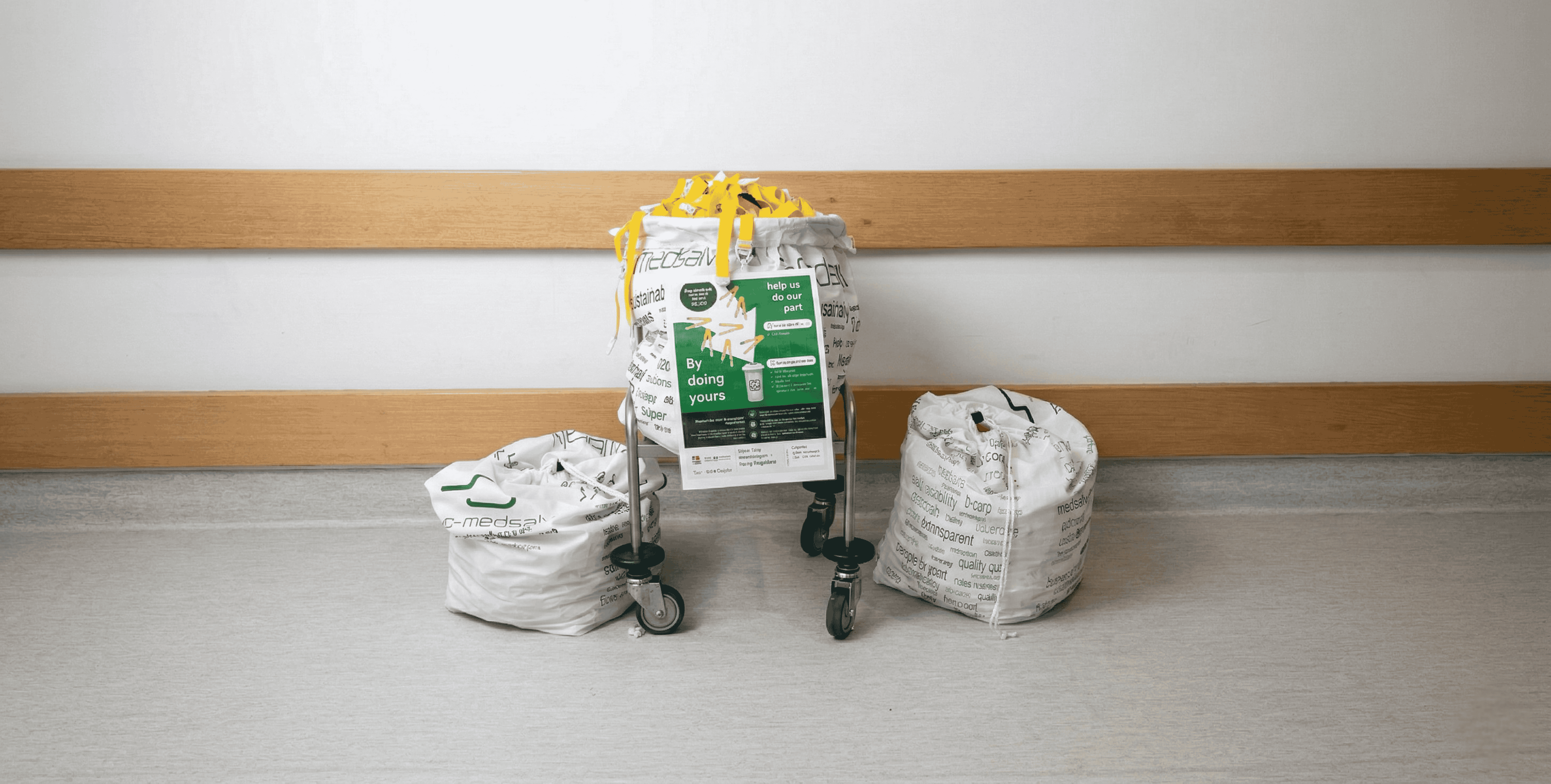
Staff do place the devices in dedicated receptacles, but clinically there are no workflow changes, no new training requirements, no new processes to learn - to use a remanufactured device, you must already use the original device
The difference is unit cost, which is typically significantly lower than new OEM pricing.
Medsalv customers are achieving cost reductions of up to 60% on qualifying device categories.
Across a hospital's total device spend, this represents a meaningful and measurable budget improvement.
Where large medical device manufacturers have used IP law and frequent changes and updates to their products that prevent third party generic products being used with equipment, remanufacturing provides for a safe, regulated way to achieve the same benefits.
A Broader View of What Devices Actually Cost
Hospitals using remanufactured devices are also capturing savings that extend beyond the clear and real unit price differences, savings that don't always appear on a standard invoice comparison.
Because remanufactured devices go through multiple cycles before end-of-life (up to 14 uses per device have been recorded in Medsalv's program)
the volume of single-use waste generated is substantially reduced. Fewer devices entering the waste stream means lower disposal costs, reduced environmental compliance overhead, and less logistical complexity in waste management.
Waste disposal costs are rising across the sector. Hospitals that reduce waste volume directly benefit from that trend moving in their favour rather than against them.
The numbers from MedSalv's current hospital partners illustrate the scale of what's possible when both unit cost and waste cost are optimised together:
652,701 devices saved from landfill across the program
Up to 60% cost reduction vs new OEM pricing (qualifying categories)
Up to 92.8% waste reduction per device lifecycle
Up to 14 remanufacturing cycles per device before end-of-life
160+ hospital partners across Australia and New Zealand
Supply Chain Resilience as a Procurement Outcome
Strong procurement teams are increasingly attentive to supply chain risk, a consideration that has become more prominent in recent years.
Local remanufacturing capability, with Medsalv operating facilities in both Geelong, Australia and Christchurch, New Zealand, means hospitals aren't solely dependent on offshore manufacturing and international logistics for these device categories.
This isn't a secondary benefit.
For procurement leaders thinking about supply continuity alongside cost, local sourcing adds a meaningful layer of resilience to what is otherwise a straightforward cost-saving decision.
It’s the medical device equivalent of a generic drug - something that is otherwise challenging to find, as device companies fight to use proprietary fixtures.
The Common Thread Between Participating Hospitals
The hospitals achieving results with Medsalv’s remanufacturing don't fit a single profile.
They're all over Australasia - from Broome to Invercargill, Auckland to Darwin. They include public and private, metropolitan and regional, large health networks and standalone facilities.
What they share is a procurement posture, grounded in strong leadership, that makes room for compliant alternatives when a strong case can be made, and the recognition that regulatory compliance, safety, and cost efficiency are not in tension here.
TGA regulation exists precisely to ensure that alternatives like this can be evaluated consistently on their merits. Devices that meet the standard are devices that can be used with confidence.
The hospitals that have moved on this are running procurement strategies aligned with their operational needs. The savings are real, the compliance is clear, and the operational impact is only positive
Applicable Device Categories
Medsalv's remanufacturing program currently covers a defined range of device categories.
Where a hospital's existing usage overlaps with those categories, the savings opportunity can be assessed directly against current spend.
Medsalv conducts up to 9 tests and inspections per device, every time the device is tested through the remanufacturing process.
Every device returned to clinical use is ARTG-listed and fully documented. Products like VTE sleeves and patient transfer mattresses present a great opportunity to deliver cost savings, all fully traceable.
The same devices as the original, but for less.
Where to Start
The starting point for most hospitals is the collections process, which can be kicked off by anyone in the hospital - as soon as this gets to procurements, it’s a straightforward spend analysis, identifying which device categories in current use are eligible for remanufactured alternatives, and modelling what the cost difference would represent.
This doesn't require a procurement process overhaul. In many cases, hospitals are introducing remanufactured devices within existing flexibility in their supply arrangements.
The question worth asking is a simple one: for the device categories where a TGA-regulated, ARTG-listed alternative exists at a lower price — what is the current cost of not using it?
Further reading: read our case studies and practical guides to see how leading hospitals are thinking differently about delivering value with Medsalv.
About Medsalv
Medsalv operates TGA-regulated remanufacturing and with facilities in Christchurch, New Zealand, and Geelong, Australia. Since 2017, Medsalv has partnered with over 160 hospitals to reduce medical device costs and environmental impact without compromising clinical safety. Every device is ARTG-listed and meets the same standards as new products.
www.medsalv.com

.webp)